How Social Media Algorithms Affect Growth: Platform-by-Platform Breakdown
You posted something great. Your last 10 posts got 500–800 views each. This one got 90.
You didn't do anything differently. So why did the algorithm bury it?
The answer is in how these platforms actually make decisions — and it's more logical than it feels in the moment. Once you understand the mechanics, you can stop guessing and start working with the algorithm instead of against it.
How Instagram's algorithm works in 2026
Instagram uses separate ranking systems for the Feed, Explore, and Reels — they're not the same algorithm.
For Feed posts, the primary signals are:
- Your history with that account (do you usually like/comment on their posts?)
- Post engagement in the first 30–60 minutes after publishing
- Time spent on the post (lingering = strong signal)
- Relationship signals (DMs, tags, profile visits)
For Reels, the signals shift:
- Watch-through rate (did people finish the video?)
- Reshares (did people send it to friends?)
- Saves
- Audio usage (trending audio boosts early distribution)
The cold start problem: Every post starts with a test distribution to a small slice of your followers. If that group engages, the post gets pushed further. If they don't, the post dies. This is why the first hour after posting matters so much — it's your test window.
The "SMM Play": Forced Categorization
This is where most "organic-only" creators fail. They wait months, sometimes years, for the app to naturally figure out their audience. In a competitive market, you don't have that kind of time.
You need to force-feed the algorithm this data. By using a reliable smm panel to send hyper-targeted engagement to your early posts, you are essentially handing the AI a cheat sheet. When you use tools like smmgalaxy to inject niche-specific engagement—likes, comments, and saves from accounts that already interact with your niche—you are telling the algorithm exactly who your target demographic is.
Think of it like training a puppy. You are rewarding the algorithm for showing your content to the "right" kind of engagement profiles. The Interest Engine picks up the pattern immediately and starts pushing your content to real, organic users in that exact space. You aren't just buying numbers; you are buying Data Signals that train the AI to work for you.
How YouTube's algorithm works in 2026
YouTube's algorithm is the most transparent of the major platforms. Its stated goal is to recommend videos that viewers are likely to watch and enjoy — not just click on.
The two main levers:
Click-through rate (CTR) — what % of people who see your thumbnail actually click. A strong CTR (above 5–8%) tells YouTube the thumbnail-title combination is working.
Average view duration — how long, on average, people watch before leaving. YouTube wants this as high as possible. Even if your video is 20 minutes, a 40% average retention is excellent.
The algorithm also weighs:
- Subscriber satisfaction after watching (do they watch more YouTube after?)
- Playlist additions
- Comments that contain questions (signals active discussion)
What causes a YouTube drop: Posting too infrequently breaks your subscriber habit. If you skip 3–4 weeks, your next video gets treated almost like a cold-start upload.
How Facebook's algorithm works in 2026
Facebook reaches a different demographic than Instagram or YouTube — predominantly 30–55 year olds in India — and its algorithm reflects that audience's behaviour.
The key signals:
- Meaningful social interactions: comments (especially back-and-forth threads) are weighted much higher than reactions
- Video watch time: Facebook watch time above 1 minute is a strong positive signal
- Shares to personal timelines: the strongest organic reach signal on Facebook
- Click-through quality: Facebook penalises posts where people click, land on a bad page, and immediately return (known as "click-gap")
What Facebook buries: Posts that beg for engagement ("Comment YES if you agree!"), posts with too many outbound links, and posts that use engagement bait.
The cross-platform principle: signal stacking
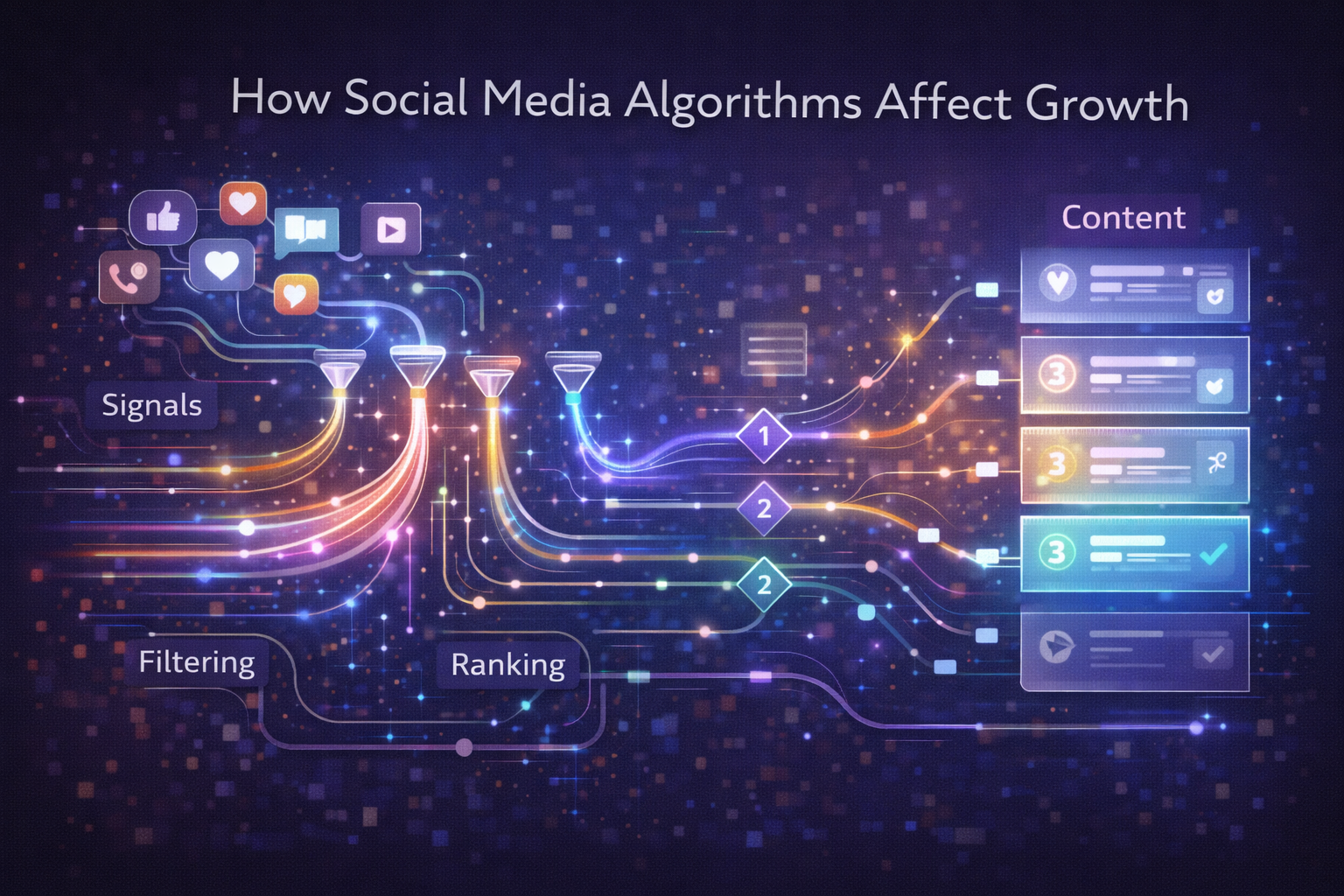
Every platform rewards the same underlying thing: content that people choose to engage with, finish, and share. The signals are different but the logic is the same.
When you're starting out or launching a new page, the biggest challenge isn't content quality — it's that you don't yet have enough initial signal to pass the algorithm's first test.
This is where SMMGalaxy's services bridge the gap. Getting genuine early engagement on your posts — views, likes, saves — gives the algorithm the signal it needs to push your content to organic audiences.
The algorithm doesn't care where the first signal came from. It cares that it happened.
Browse our Instagram and YouTube growth services to understand how initial signal-building works in practice.